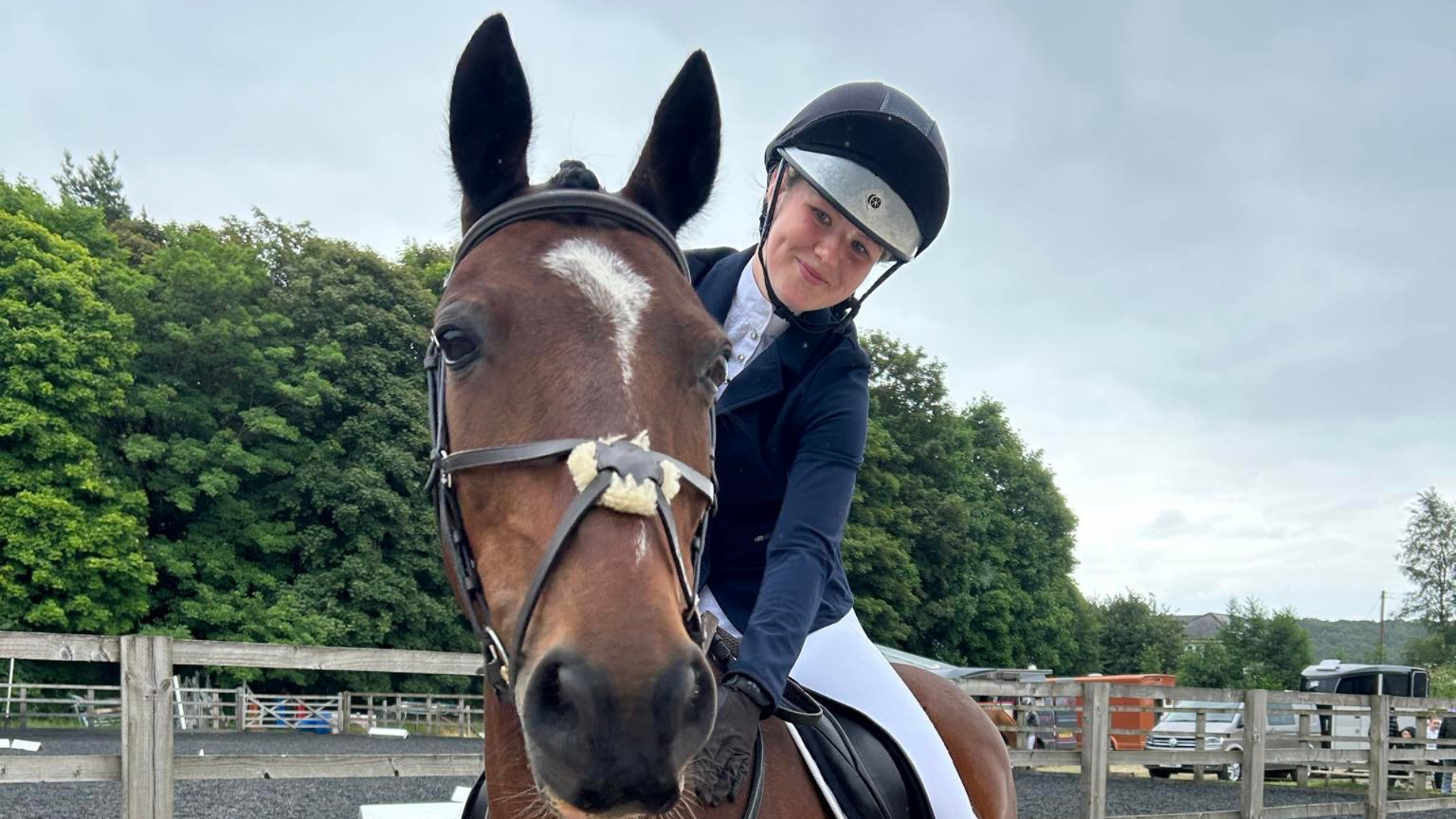
BSc (Hons) Equine Therapy and Rehabilitation
Apply today Enquire about this course Download Course InformationJump to
Subject
Equine
Level
Bachelors Degree (Level 6)
Study Mode
Full-Time
Duration
3 years
Start Date
September 2027
UCAS Course Code
DD43
The course
The demand for qualified and experienced equine practitioners has grown over recent years, with many more horse owners, trainers and riders recognising the need to promote the health and well-being of their horses in order to maximise welfare and performance and prevent injury.
The complex nature of injury development and poor performance, which result from the interaction and influence of a broad range of factors, creates a demand for holistic practitioners who work within the scope of their practice and as part of the multidisciplinary team who manage the equine athlete.
This programme will prepare you for further study and access to practitioner level qualifications. You will have the opportunity to gain excellent theoretical knowledge and practical skills within the field of equine therapy and rehabilitation, which underpin decision making and enable development of professional stance.
You will study a breadth of highly relevant science to explore in detail anatomy, physiology and biomechanics to ensure appreciation of functional movement. You will develop your knowledge and understanding of behaviour, nutrition and exercise physiology to ensure essential underpinning of concepts and applied approaches to working within equine performance roles.
The role of para-practitioners and the multi-disciplinary equine team is an important inclusion. This course will provide you with extensive opportunities to engage with industry professionals to further prepare you for working collaboratively in industry.
The inclusion of modules to develop scientific laboratory techniques will allow you to progression into broader aspects of equine performance, such as roles within veterinary laboratories.
You will undertake work experience and assessment on our state-of-the-art equine therapy centre, providing you with an insight into all aspects of a commercially operating facility. This first-hand experience will ensure that you are fully equipped with the knowledge and practical skills to operate and assess the role of specialist equipment.
Yorkshire and Humber Institute of Technology
Learn future tech for today’s workplace. Whether advancing your skills, or retraining, elevate your career opportunities with the Yorkshire and Humber Institute of Technology.
As an IoT programme, the course will provide you with access to the latest technologies, ensuring that you are work-ready and have a clear career progression pathway into employment.
Course Information
- Develop you into a critically informed, reflective and practically skilled graduate, ready to enter a wide variety of roles in management, therapeutic and rehabilitation settings.
- Provide you with a sound academic understanding of the broad range of complementary and alternative therapies available to the horse to promote health and performance.
- Provide you with the theoretical underpinning of scientific principles surrounding strategies of equine therapy and rehabilitation.
- Equip you with the essential vocational skills for entering a diverse range of employment opportunities within the equine management, veterinary laboratory and therapy and rehabilitation spheres.
- Develop your skills and knowledge in assessing and recommending strategies to improve equine health and performance
- Help you to become proactive and independent, able to apply and develop your own perspectives and critical insight to explore alternative solutions within the equine therapy and rehabilitation industry.
Year 1
- Academic, Employment and Professional Skills
- Equine Health and Welfare
- Introduction to Equine Therapy
- Equine Anatomy and Physiology
- Introduction to Research Skills
- Equine Multi-Disciplinary Team
- Equine Nutrition
- Scientific Principles and Laboratory Skills
Year 2
- Research Methods and Analysis
- Equine Exercise Physiology
- Equine Behaviour and Welfare
- Equine Therapeutic Modalities and Ground Schooling
- Enterprise and Entrepreneurship
- Equine Infectious Diseases
Year 3
- Dissertation
- Equine Sport Injury and Diagnostic Techniques
- Applied Equine Therapy and Rehabilitation
- Applied Equine Biomechanics
- Contemporary Issues in Equestrianism
You will be required to have:
- A minimum of 96 UCAS points
AND
- GCSE English at grade 4 or above, or an equivalent qualification
- A suitable reference
UCAS points may be from qualifications such as A Levels, T Levels, BTEC Level 3 Extended Diplomas, Access to Higher Education Diplomas, and City and Guilds Advanced Technical Diplomas amongst others. Please use the UCAS Tariff points calculator to determine the UCAS points value of your qualifications.
Life and/or experience of non-traditional students will be taken into account when considering applications. The successful completion of an entry task may be required when considering applications without the required formal entry qualifications.
If your first language is not English, or a Tier 4 student visa to study is required and GCSE grade C/4 English or equivalent is not held, English language proficiency level such as International English Language Testing System (IELTS) 6.0 overall (with a minimum 5.5 in each skill) will need evidencing.
Advanced entry may be possible due to prior experience or certificated learning; applicants will need to complete the accreditation of prior learning approval process.
This programme is delivered with a variety of learning and teaching approaches, utilising excellent onsite resources and extensive industry links for applied aspects. For all modules, there are theory lectures delivered, aimed at providing the core content and underpinning knowledge.
Lectures are used to convey the basic concepts, and facilitate further expansion of such concepts by the students, through independent study. To complement the theory lectures, you will have group seminars that are used to reinforce those concepts delivered theoretically. Practical sessions will focus on development of husbandry and handling, therapy and research equipment operation, therapeutic techniques and laboratory skills.
The teaching methods focus on facilitating a student-centred approach to enhance the independent learning that takes place outside of the classroom.
You will learn from experienced, supportive and motivated staff with both academic and industrial experience. Your leaning will be supplemented with guest lectures and demonstrations from a range of visiting speakers and off-site trips, as well as access to an online learning environment.
In the first and second year of the programme, contact time includes approximately 12-13 hours a week to include lectures, seminars, practicals and tutorials. In the final year of study, contact time will be on average 9-11 hours.
In addition to contact teaching hours, there will be a minimum of 15 hours of work experience in our commercial Equine Centre during the second year of study.
You are also expected to carry out a significant amount of independent study in addition to contact time (approximately 25-30 hours a week). Independent study includes reading around the subject, preparing for tutorials and seminars, preparing for, and completing, module assessments and revision for examinations; forming an essential part of your learning journey.
- A tablet, smartphone, laptop or stationery to take notes in lectures and seminars.
- White laboratory coat.
- Riding hat to current (PAS015 (2011) with BSI kitemark) standard in a dark plain colour or silk.
- Plain, dark coloured trousers or breeches or jodhpurs, not jeans.
- Gloves for horse handling.
- Suitable yard boots or wellington boots (NB: Boots are not permitted within the classroom, so a change of footwear will be required).
- If you are undertaking any riding at Bishop Burton, you will also need: A body protector (BETA Level Three 2018. We do not permit air jackets in any day to day sessions), long riding boots or short boots with gaiters, schooling/jumping whip, long sleeved base layer or thin top, soft peaked hat or preferably jockey skull hat and silk to the standards listed above.
- You may require an enhanced DBS Disclosure, which would be at your own expense. You can check the current cost on the www.gov.uk website.
- Any educational visits/trips and enrichment activities will be additional to the course fees, students will be made aware of these optional visits and associated costs as required.
- Students can access free British Horse Society exam training onsite during their studies, the examination cost and BHS membership is an additional cost (exams can be undertaken onsite).
- On successful completion of the programme, you will have the opportunity to graduate at a ceremony wearing formal dress. The hire of the formal dress is an additional cost.
- As an Animal Health Professions Register (AHPR) accredited course, successful completion of the programme and skills logbooks enables eligibility for membership application to the AHPR Animal Sports Therapy and Massage list of practitioners. AHPR application and annual renewal fees are additional costs.

Awarded by University of Lincoln
We are proud to collaborate with University of Lincoln on the validation of this course.
View the policies and procedures you would be agreeing to comply with by registering for this programme.
Financial Information
Find the full details of the fees associated with this programme and the financial support available.
Related Courses
FdSc Applied Equine Management (Therapy)
Subject
Equine
Type
University Level
Level
Foundation Degree (Level 5)
Mode
Full-Time
Duration
2 years full-time/3 years part-time
Start Date
September 2027
FdSc Applied Equine Management (Therapy)
Subject
Equine
Type
University Level
Level
Foundation Degree (Level 5)
Mode
Full-Time
Duration
2 years full-time/3 years part-time
Start Date
September 2027
FdSc Applied Equine Management (Coaching)
Subject
Equine
Type
University Level
Level
Foundation Degree (Level 5)
Mode
Full-Time
Duration
2 years full-time/3 years part-time
Start Date
September 2027
BSc (Hons) Equine Sports Science and Coaching
Subject
Equine
Type
University Level
Level
Bachelors Degree (Level 6)
Mode
Full-Time
Duration
3 years
Start Date
September 2027