Alert icon

Next Open Day - 21 November

Tour the college, speak to our tutors and even apply on the day!

Click here to register your place

Students at Bishop Burton College develop practical skills in subjects including agriculture

‘AI can’t deliver a lamb’: Students and parents turning to hands-on careers

4 Nov 2026 |

Bishop Burton College students preparing for hands-on careers say they are confident the practical skills they are learning will remain essential in an increasingly AI-driven world – because, as one puts it: “AI can’t deliver a lamb”.

Their views come as new research revealed widespread concern among both teenagers and their parents about how artificial intelligence could reshape the jobs market – and suggests it is already prompting families to look more closely at vocational careers.

The OnePoll survey of 4,000 UK parents of secondary school children aged 11 to 16 and their children we commissioned found more than three-quarters of parents – 77% – are worried AI will affect their child’s job prospects.

Two-thirds – 66% – said the rise of AI meant they were considering a more vocational career route for their child, while 46% of the young people questioned said AI had made them think about pursuing a more “hands-on” job.

The research also revealed regional differences, with concerns about the impact of AI particularly high in London and the North East.


Students and their parents are turning to practical careers according to a One Poll survey
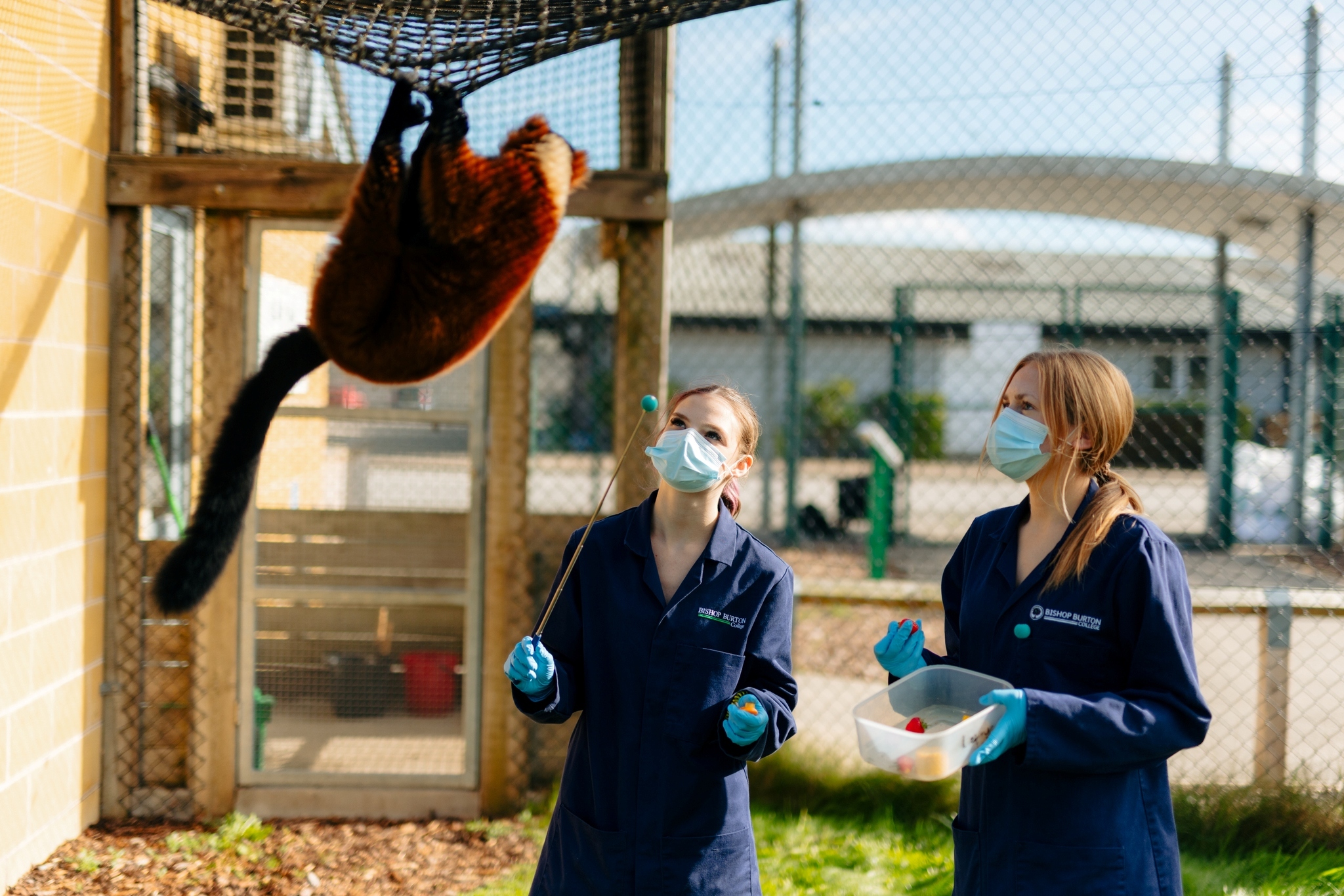
Animal management is one of the hands on subjects delivered at Bishop Burton College

In London, 71% of young people said they were worried AI might change the kind of jobs available to them, compared with 66% nationally. The same proportion – 71% – of London parents said the rise of AI meant they were considering more vocational career routes for their children, while 57% said it had prompted them to consider a more vocational career themselves.

Concern was even higher in the North East, where 73% of young people were worried AI could change the jobs available to them and 88% of parents were concerned about its impact on their child’s job prospects.

More than three-quarters – 78% – of young people in the North East said they were considering an apprenticeship instead of university because of the cost of higher education, while 71% of parents were considering more vocational career routes for their children.

The findings come amid a renewed national focus on vocational and technical education, with Prime Minister Andy Burnham pledging to give practical skills greater parity with traditional academic routes.

Mr Burnham has announced plans to give young people access to technical education from the age of 14, combining core academic subjects with skills training, work experience and stronger links to local employers.

He said Britain should “value the hard hat as much as the graduation cap” and argued that the education system has become too focused on the university route.

Bishop Burton College has specialised in vocational and technical education for over 70 years. We cover a wide range of practical subjects, including agriculture, animal management, engineering, construction, equine, horticulture and sport.

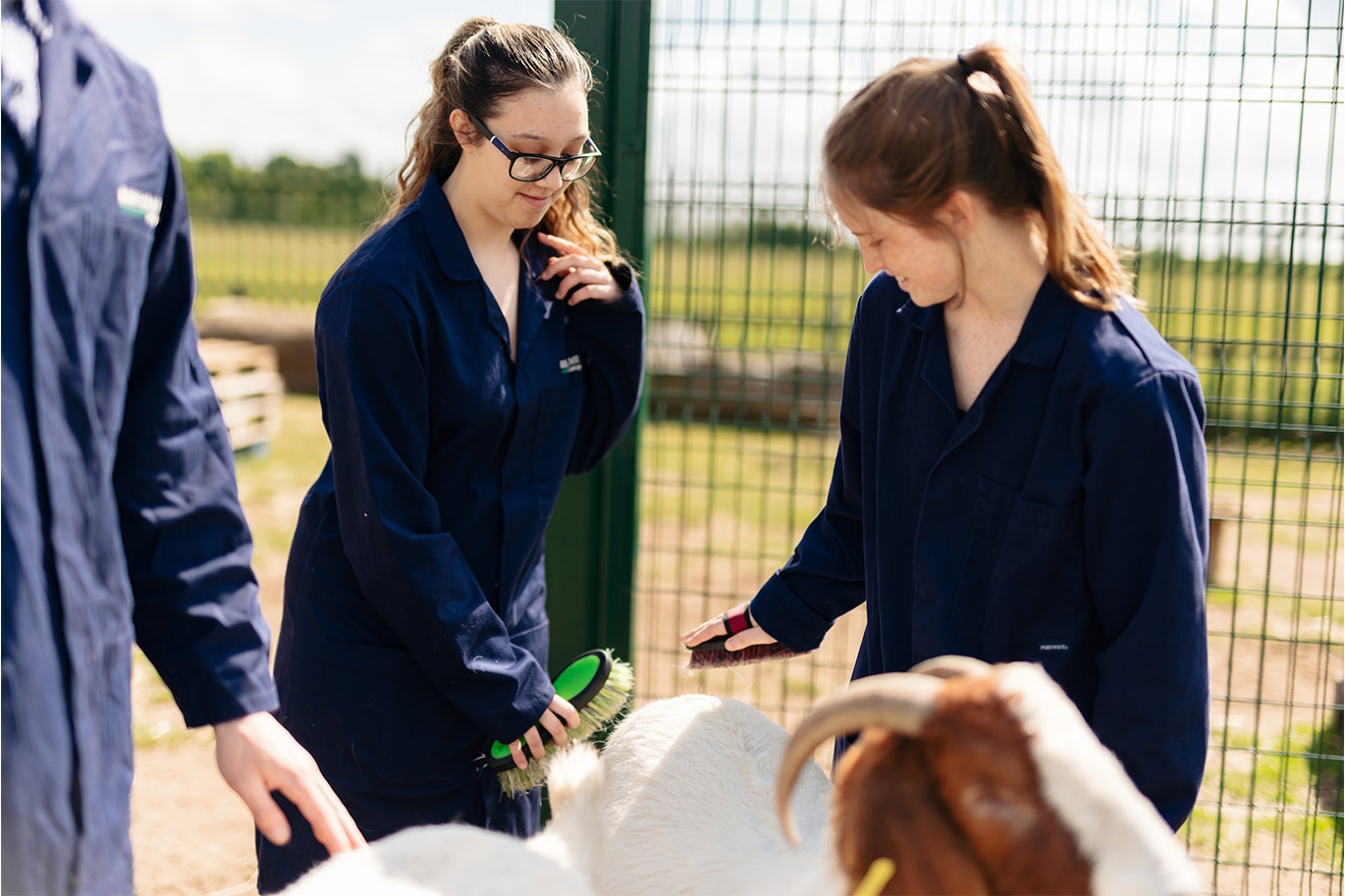
Animal student brushing goat
Bishop Burton College 2nd October 2026 142

Students learn in real-world environments and specialist facilities, gaining practical experience alongside the academic and technical knowledge required for their chosen careers.

Katy Cranston, who is in the second year of her T Level in Agriculture, Land Management and Production (Livestock Production), said: “I can see why people are worried about AI. I think it’s a great tool, but AI can’t deliver a lamb, can it?

“On my T Level, I’m learning what is needed to succeed in my career choice and I can see how technology assists farming, but I also know where its limits are.

“AI won’t be impacting farming as quickly as some other careers, so I can see why parents and people my age are reconsidering their career choices and perhaps looking at agriculture.”

Fellow second-year student Bea Treetops, who is on the same T Level, comes from a farming family and said practical experience is irreplaceable.

She said: “I can understand why people are worried about AI when making career choices. It was never something I thought about because I’m from a family of farmers.

“I just think AI can’t worm 400 lambs. It has its uses, alongside other technology, but the practical stuff will always be human and hands-on.”

It is a view shared by Louis Horstwood, a second-year student on the T Level in Agriculture, Land Management and Production (Crop and Plant Production).

He said: “I think people will be drawn to our industry because they see it as a more reliable and less AI-impacted place to be.

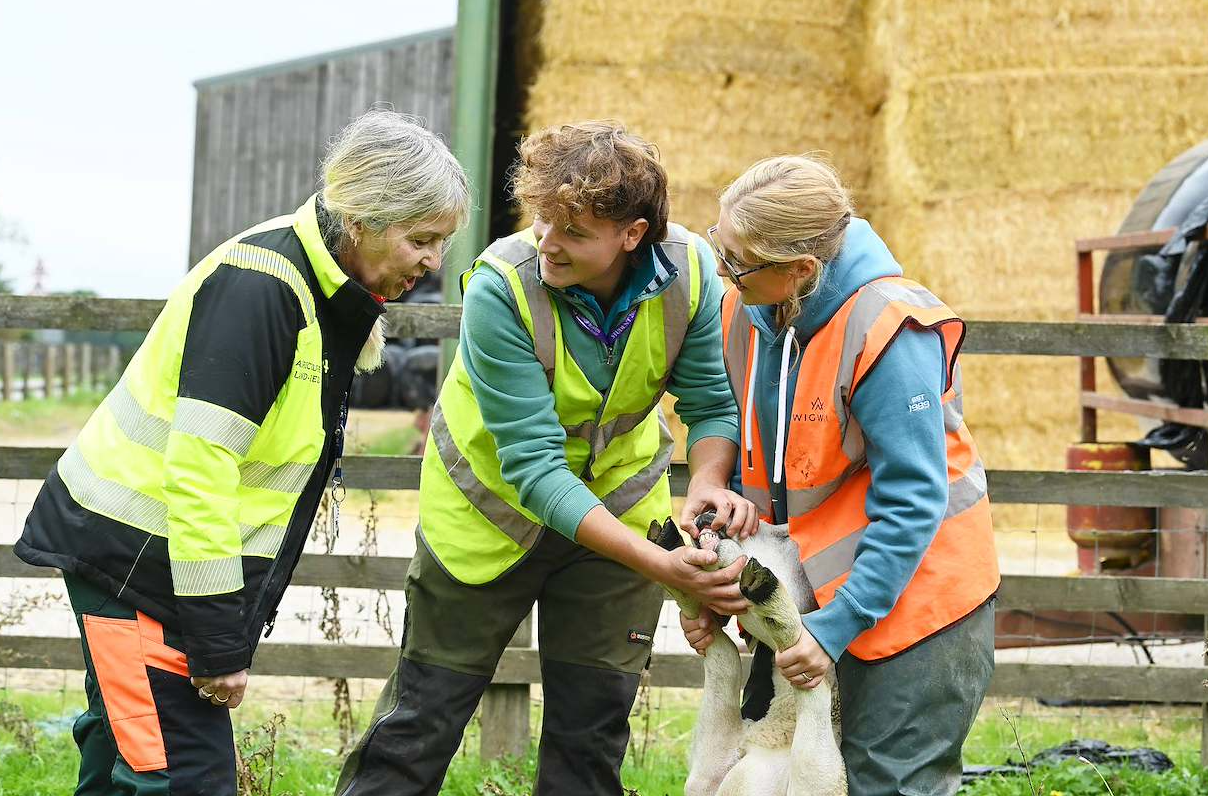
Agri gallery Agriculture student checking sheeps hooves
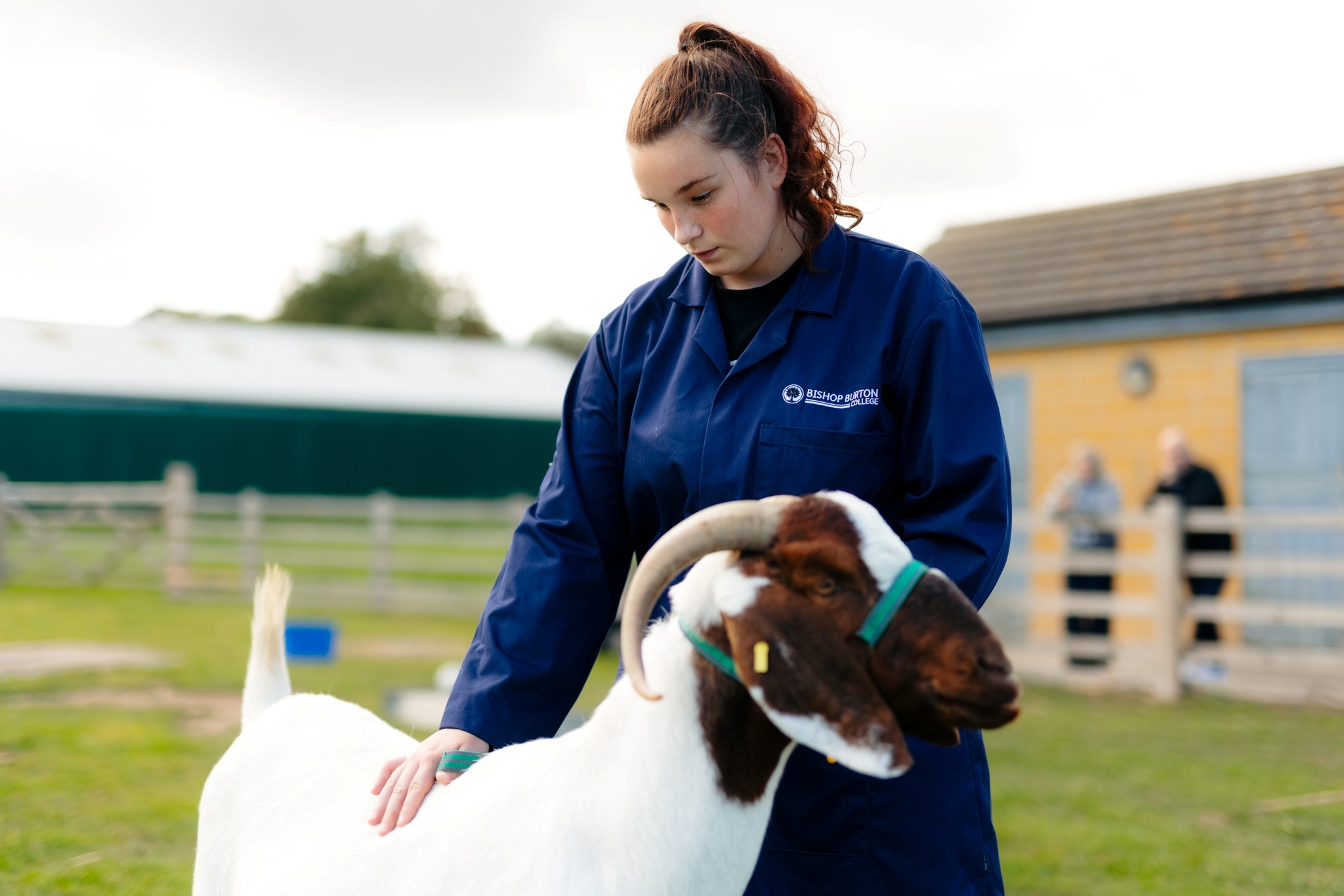
Animal gallery Animal Care student presenting goat at Stock Skills competition

“Let’s face it, AI can’t change the points on a plough. It might let you know there is a problem with them, but if the subsoil breaks them and you’re out in a field, it won’t be AI fixing it – it will be me.

“So, I don’t see farming being taken over by AI any time soon.”

Colt McGannon, who is in the second year of his T Level in Land-based Engineering, is following in the footsteps of his family and hopes eventually to take over his father’s business.

He said: “I was always going to go into engineering because I come from a family of engineers and one day I hope to take over my dad’s business.

“What I learn and what I do is so practical. AI isn’t going to replace me, my hands and my skills any time soon.

“It will definitely affect some jobs more quickly than engineering, so I’m really happy with my course and my career choice.”

Alice Harriman, another second-year T Level in Agriculture, Land Management and Production (Livestock Production) student, said the debate around AI could encourage people who had never previously considered farming to look at the opportunities available.

She said: “I grew up around agriculture and come from a farming background, so it was very natural for me to pursue a T Level in Livestock Production.

“The concerns around AI are getting a lot of headlines at the moment, so I completely understand why agriculture is becoming more appealing to people from non-agricultural backgrounds.”

Bishop Burton College is embracing AI and emerging technology across our curriculum, ensuring students understand how it can be used effectively in their chosen sectors.

In agriculture, AI is used to improve efficiency, sustainability and food production. For example, AI plant recognition ensures more precise chemical application, and autonomous tractors which use AI, GPS and computer vision perform field operations with minimal human intervention. 

However, practical, hands-on skills development remains at the core of teaching and learning at the college.

We are also continuing to invest significantly in the facilities needed to develop practical skills.

The college recently secured £2.5m from the Department for Education’s Construction Skills Capacity Fund to expand our Technical and Skills Construction and Engineering Centre.

The development will create almost 100 additional learner places and new state-of-the-art workshops, as well as enabling us to introduce additional training in painting and decorating and interior and exterior wall insulation.

Construction enrolments at Bishop Burton College have risen by 21% this year, marking the fourth consecutive year of growth.

Principal and Chief Executive Danny Metters said the OnePoll survey demonstrated why colleges needed to prepare young people for a changing employment landscape while continuing to champion the value of vocational skills.

He said: “We absolutely embrace AI and new technology at Bishop Burton College because our students need to understand and use the technology they will encounter throughout their careers.

“That applies right across our curriculum. We want our students to understand how technology can help them do their jobs better.

“But technology doesn’t remove the need for skilled people. Whether someone is caring for an animal, building a wall, repairing machinery, working with a horse or supporting another person, there are practical skills, professional judgement and human qualities involved that cannot simply be automated.

“That is why practical education matters so much. AI will undoubtedly change the workplace and our responsibility is to prepare young people for that change, while giving them the skills and experience employers need.

“There will continue to be huge demand for people who can combine technical knowledge with genuine hands-on ability, and that is what vocational education is designed to provide.”

Read more news

Course Search How to Apply Open Event Booking